A New Chapter in Eastern Indonesia’s Industrialization: Pupuk Indonesia Partners with Global Companies to Develop Fakfak Ammonia-Urea Complex
-
 Posted by User01
- Share


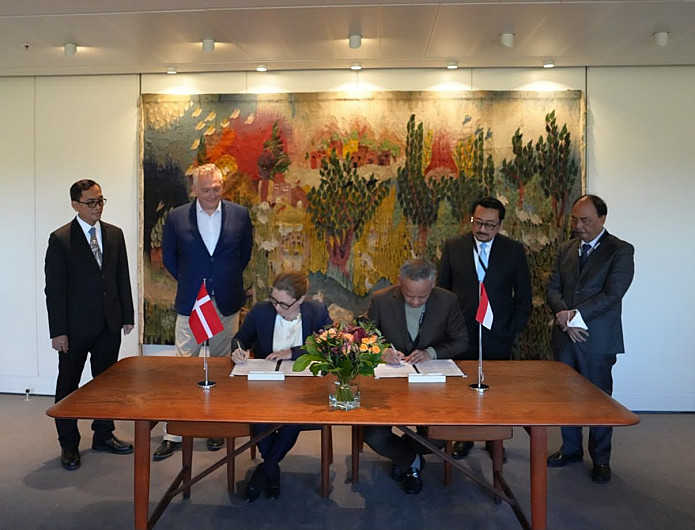
Jakarta, November 20, 2026 – PT Pupuk Indonesia (Persero), through its subsidiary PT Pupuk Kalimantan Timur (Pupuk Kaltim), has embarked on a new chapter in the development of the Fakfak Ammonia-Urea (Amurea) Complex in West Papua. This milestone is marked by partnerships for the development of the Basic Engineering Design (BED) with two international technology and engineering companies, Denmark’s Topsoe and Japan’s Toyo Engineering Corporation (TOYO).
President Director of Pupuk Indonesia, Rahmad Pribadi, said that the development of the Fakfak Amurea Complex represents a strategic step for Pupuk Indonesia in strengthening food security while accelerating industrialization in Eastern Indonesia. The project also forms part of Pupuk Indonesia’s efforts to transform itself into a globally competitive petrochemical company.
“Food security is the starting point of this project. Beyond that, the Fakfak Amurea Project will create added value from natural gas resources through technology and innovation. This project will serve as a driving force for industrialization in Eastern Indonesia and strengthen Pupuk Indonesia’s position in the global petrochemical industry,” Rahmad said.
The Fakfak Amurea industrial complex is designed to have an annual production capacity of approximately 825,000 tons of ammonia and 1.15 million tons of urea. For the ammonia production facility, Pupuk Indonesia has partnered with Topsoe through an agreement signed in Copenhagen on November 13, 2026, covering the licensing of SynCOR Ammonia™ technology and the development of the BED.
The Fakfak ammonia facility will be the first in Indonesia to adopt Topsoe’s SynCOR Ammonia™ technology. This technology has the potential to reduce natural gas feedstock requirements by up to 10 percent compared to conventional production processes.
According to project estimates, the adoption of this technology could also reduce carbon dioxide (CO₂) emissions by 19–24 percent compared to conventional ammonia production methods. The facility is also being designed under a ready-to-blue approach, enabling the integration of Carbon Capture and Storage (CCS) or Carbon Capture, Utilization and Storage (CCUS) technologies in subsequent development phases.
Meanwhile, the partnership with TOYO, formalized through an agreement signed in Tokyo on November 17, 2026, covers the development of the BED for the urea production facility, which will adopt ACES21™ technology. This technology is designed to improve energy efficiency and reduce plant construction investment costs.
“We are developing the Fakfak project using cutting-edge technology that meets global standards. This development will strengthen national urea production capacity. Once domestic demand has been met, the expanded capacity will create opportunities for Indonesia to contribute to food security across the region and the wider Asia-Pacific,” Rahmad added.
The development of the BED will provide a key technical foundation for advancing the Fakfak Amurea Project to its subsequent stages, including the Final Investment Decision (FID) process and the Engineering, Procurement, and Construction (EPC) tender.
Alongside the development of the technical design, Pupuk Indonesia and Pupuk Kaltim are continuing technical site assessments and preparations for the necessary permits to support subsequent project stages. The companies are also ensuring that the project is implemented in accordance with the principles of prudence and good corporate governance through comprehensive feasibility studies and measured risk mitigation.
The development of the Fakfak Amurea Project forms part of Pupuk Indonesia’s broader industrialization agenda, which encompasses the construction and revitalization of eight plants over the next five years. Through increased production capacity and efficiency, as well as diversification into value-added chemical industries, Pupuk Indonesia seeks to strengthen national industrial self-reliance while ensuring sustainable fertilizer supplies to support food self-sufficiency.
Catatan Q (di luar naskah): Terdapat kesalahan pengetikan pada frasa “diversifikasi industri kimia bernilai tambah m Pupuk Indonesia” di paragraf terakhir. Huruf “m” tersebut saya hilangkan dalam terjemahan. Seluruh angka, tanggal, dan substansi teknis tetap dipertahankan sesuai naskah sumber.