Promoting Sustainable Agriculture, Pupuk Indonesia Encourages Farmers to Redeem Subsidized Organic Fertilizers
-
 Posted by
- Share


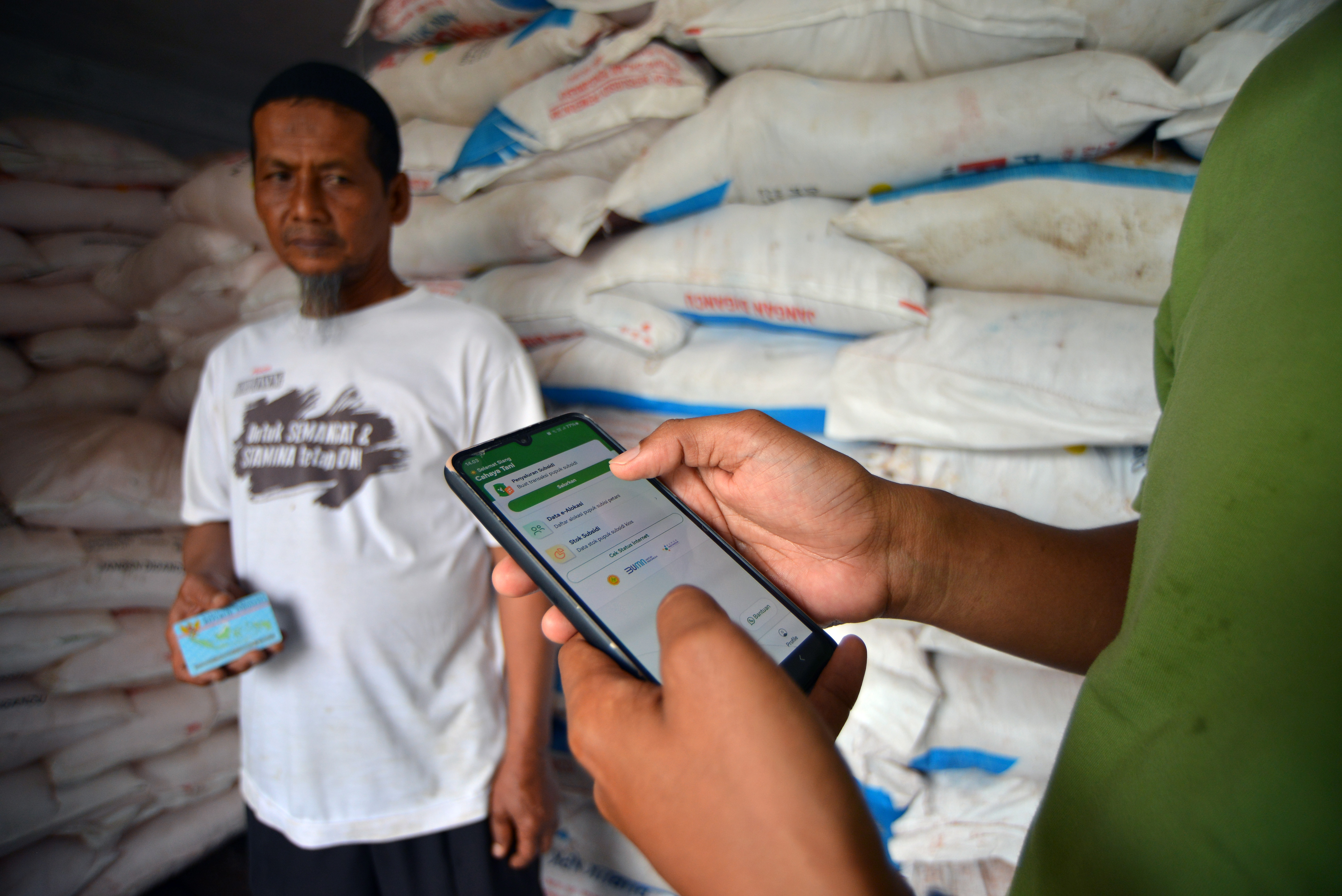
PT Pupuk Indonesia (Persero) encourages farmers to redeem subsidized organic fertilizer, or Petroganik, to realize sustainable agriculture and improve agricultural yields. This was conveyed during a joint harvest activity of the Petroganik Demonstration Plot (Demplot) Program in Soco Village, Slogohimo Sub-district, Wonogiri Regency, Central Java, on Friday (21/11/2025).
Senior Manager (SM) for Sales Support of Regional 2 at Pupuk Indonesia, Binti Zumriati, stated that subsidized organic fertilizer is highly needed because the organic carbon (C-organic) content in several agricultural areas of Wonogiri is relatively low.
“This needs to be our shared concern, as the average C-organic content of soil in Indonesia is still low. Based on sample test results, the C-organic content in Wonogiri Regency is also still low, averaging below 2 percent,” she said.
Pupuk Indonesia, in collaboration with the Association of Organic Fertilizer Producer Partners (HIMPO), initiated the Petroganik demonstration plot to provide an example for farmers. The combined use of inorganic and organic fertilizers can have a significant impact on increasing productivity.
Binti Zumriati revealed that the use of Petroganik at a dosage of 1,000 kilograms per hectare (ha) resulted in very good crop conditions and led to an increase in yields of up to 30 percent. Based on yield sampling, production increased to 9.8 tons per hectare, compared to farmers’ usual yield of 7.5 tons per hectare. In addition, she explained that the demplot land has used Petroganik for two planting seasons. The application of Petroganik on this land increased the C-organic content from 1.65 percent (low) to 2.1 percent (moderate).
“We hope that the consistent use of Petroganik can increase the productivity of agricultural land in Wonogiri Regency. C-organic content plays an important role in providing and retaining nutrients; therefore, low levels result in reduced nutrient availability for crops,” Binti Zumriati explained.
She also added that the use of organic fertilizer not only increases crop yields but also preserves environmental sustainability. According to her, through this demplot, Pupuk Indonesia also aims to share experiences and successes achieved together with local farmers who have explored the potential of organic fertilizer in improving soil quality and agricultural output.
Furthermore, Binti Zumriati stated that this year, the realization of distribution or redemption of subsidized organic fertilizer, Petroganik, has been encouraging, reaching 69 percent of the allocated quota. The allocation of Petroganik fertilizer in Wonogiri throughout 2025 amounts to 1,000 tons.
Meanwhile, the overall redemption of subsidized fertilizers in Wonogiri reached 77.7 percent, or 47,076 tons out of a total allocation of 60,561 tons. At the provincial level, redemption realization in Central Java Province stood at 82.5 percent, or approximately 1,161,098 tons out of the 2025 allocation of 1,407,307 tons.
“The benefits of using organic fertilizer can be felt not only in the present but also in the future, as part of efforts to realize sustainable agriculture in support of national food self-sufficiency,” Zumriati concluded.