Pupuk Indonesia Supports the Implementation of the New Ceiling Price for Subsidized Fertilizer to Strengthen National Food Security
-
 Posted by
- Share


As the peak of the 2025 end-of-year planting season approaches, all eyes are on Indonesia’s readiness to ensure the availability of fertilizer—one of the key components of agricultural productivity. Amid the dynamics of the new policy on the highest retail price (HET) of subsidized fertilizer, Pupuk Indonesia has taken swift and strategic steps through the release of subsidized fertilizer shipments from the Pupuk Kaltim Industrial Area in Bontang, Petrokimia Gresik in Gresik, and Pupuk Kujang in Karawang. This initiative marks the company’s full preparedness to support the new HET policy and to ensure uninterrupted fertilizer distribution.
At the event in Bontang, Pupuk Indonesia released the first shipment of subsidized urea fertilizer bound for Sumbawa, West Nusa Tenggara (NTB). Meanwhile, in Petrokimia Gresik, the fertilizer release was carried out as part of efforts to accelerate distribution across Java and surrounding regions. At Pupuk Kujang, shipments were conducted to supply subsidized fertilizer needs in West Java and nearby areas.
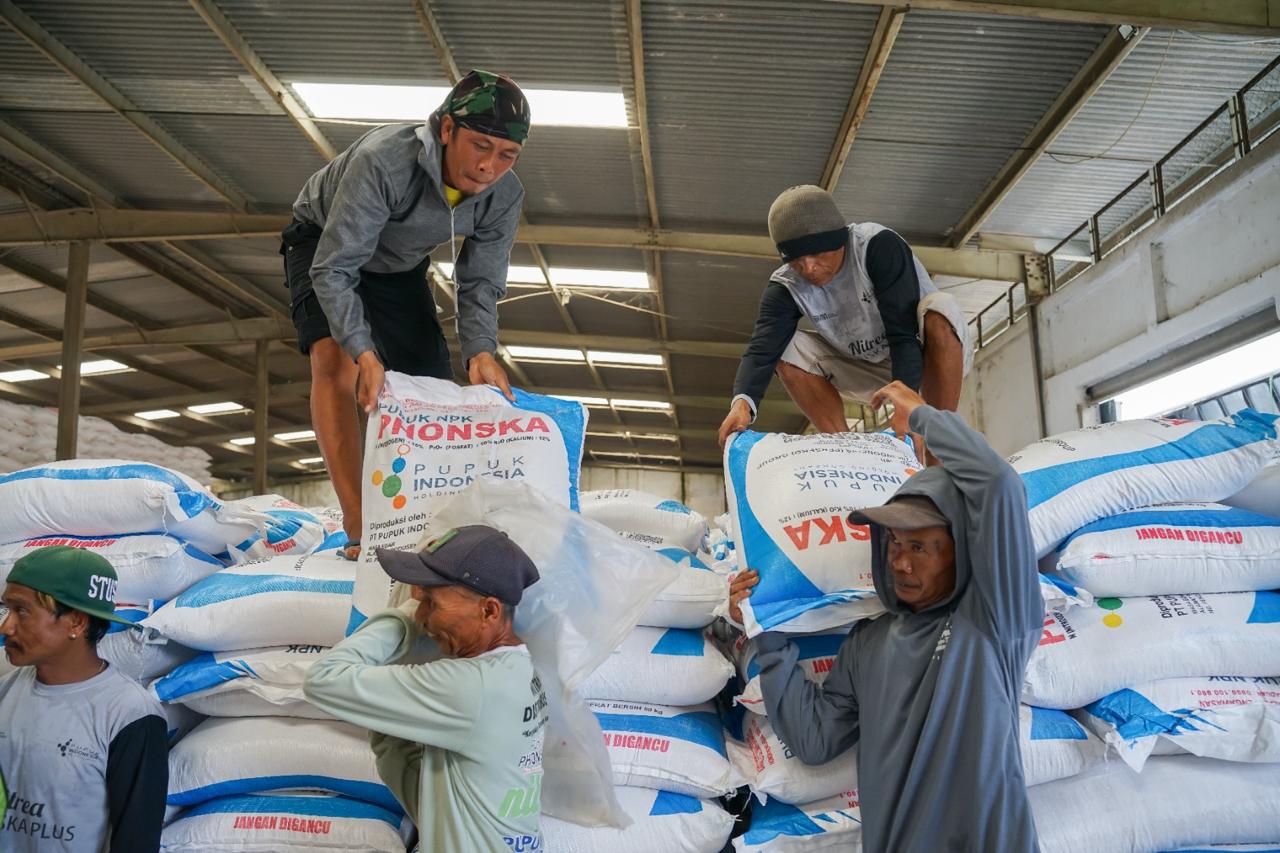
These three points serve as symbols of the start of fertilizer distribution under the new HET scheme, which is more affordable for farmers. In the midst of high agricultural activity and rising fertilizer demand toward the end of the year, Pupuk Indonesia ensures that distribution via sea, land, and integrated logistics channels runs smoothly. This momentum not only demonstrates the company’s operational readiness but also reflects its commitment to supporting government policies that prioritize farmers.
Support for the New HET Policy
During the release of the subsidized fertilizer vessel, President Director of Pupuk Indonesia, Rahmad Pribadi, stated that this activity is an initial step in ensuring the company’s readiness for the upcoming planting season. According to him, the distribution of subsidized fertilizer is not merely about logistics, but also a moral commitment to maintaining the stability of national agricultural production. Therefore, this shipment represents Pupuk Indonesia’s full preparedness in carrying out the nation’s mandate.
Rahmad emphasized the company’s full support for the policy to reduce the highest retail price (HET) of subsidized fertilizer by 20%, which took effect on October 22, 2025. This policy is considered historic, especially during the administration of President Prabowo Subianto, as it demonstrates real support for farmers. According to Rahmad, the lower HET will significantly impact agricultural production costs, improve fertilizer accessibility, and sustain farmers’ motivation as they prepare their land for the planting season.
He also highlighted that Pupuk Indonesia remains committed to the 7Ts principle (right time, right place, right type, right quantity, right quality, right price, and right target) in the distribution of subsidized fertilizer. This principle serves as the company’s foundation to ensure that fertilizer reaches the rightful recipients efficiently and accurately. Rahmad added that the implementation of the new HET must not hinder distribution. Instead, swift action is essential so that farmers can experience the benefits of this policy as soon as possible.
Field Implementation of the New HET: System Integration and Public Transparency
To ensure the new HET policy runs effectively, Pupuk Indonesia has carried out comprehensive system integration. All official fertilizer kiosks are now connected to the Integrated Subsidized Fertilizer System (i-Pubers), a digital platform that ensures transactions, price monitoring, and fertilizer distribution are recorded transparently. Through this system, the latest HET is automatically displayed in the application, preventing confusion among farmers and kiosk operators regarding price changes.
As part of public transparency, all handover points now display official stickers indicating the updated HET. These stickers allow the public to directly monitor fertilizer prices, prevent irregularities, and ensure that farmers receive fertilizer at government-mandated prices.
The implementation of the new HET is also supported by synchronized fertilizer distribution from various national production and distribution hubs, ensuring adequate supply across all regions. This approach guarantees equitable and rapid distribution to high-demand areas.
National and Regional Stock Preparedness Ahead of the Planting Season
Fertilizer distribution cannot run optimally without sufficient stock. For this reason, Pupuk Indonesia consistently prepares national subsidized fertilizer stocks amounting to two to three times the national minimum requirement. These stocks include urea, NPK, and other subsidized fertilizer types, ensuring stable supply during periods of sharply rising demand.
Pupuk Indonesia ensures that fertilizer supplies are sufficient to meet farmers’ needs for the next two to three months. This secure stock level provides reassurance for farmers, especially those preparing for intensive planting periods. Stock stability also serves as an indicator of national readiness in safeguarding agricultural production and achieving food security.
Impact of the HET Reduction on Farmer Productivity
The policy of reducing the fertilizer HET is not only a relief for farmers but also a strategic step to improve national productivity. Rahmad Pribadi emphasized that affordable fertilizer prices are essential to the success of the agricultural sector. Historically, every Rp1,000 increase in fertilizer prices has been shown to reduce farmers’ fertilizer application rates by 13–14 percent. This reduction eventually leads to significant declines in agricultural production.
The 20% reduction in HET is not merely an economic policy—it is a strategic move to sustain farming practices. With lower prices, farmers can apply fertilizer according to recommended doses, rather than cutting back due to high costs.
Proper and adequate fertilizer application directly correlates with increased agricultural productivity. On a national scale, this policy has the potential to boost food production, reduce import dependence, and strengthen Indonesia’s food self-sufficiency. In other words, the new subsidized fertilizer HET not only benefits farmers but also positively impacts national economic and social stability.
Farmer Outreach and Assistance through the Rembuk Tani Program
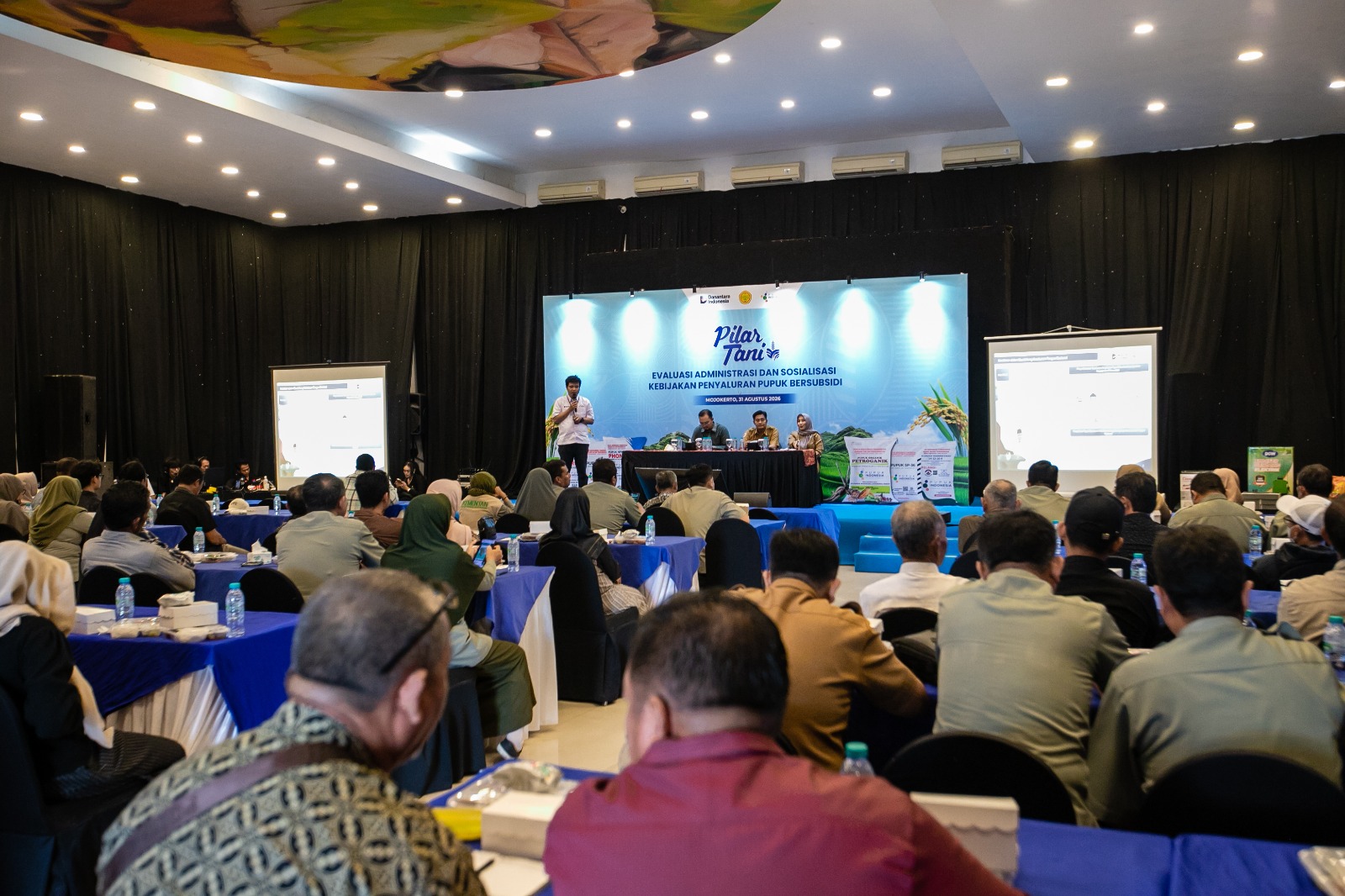
Implementing a major policy such as the HET adjustment requires intensive outreach. Pupuk Indonesia recognizes that farmers’ understanding of new rules and mechanisms is crucial for smooth field implementation. Therefore, the company has launched a series of outreach activities through the Rembuk Tani program.
Rembuk Tani serves as a direct dialogue platform between Pupuk Indonesia and farmers in various regions. Through this program, farmers receive education on subsidized fertilizer distribution mechanisms, instructions on using the i-Pubers application, and information on the updated HET. Additionally, the program focuses on improving agricultural literacy through training on balanced fertilization, efficient fertilizer use, and the adoption of digital technology in crop cultivation.
This assistance is especially important for small and medium-scale farmers who require direct guidance to understand the new policy. Through two-way communication, Pupuk Indonesia can listen to farmers’ concerns, feedback, and aspirations, enabling continuous system improvements. Rembuk Tani is not merely outreach—it symbolizes the state’s presence in supporting farmers through strategic state-owned enterprises.
Pupuk Indonesia’s Commitment to Food Sovereignty
Amid the dynamics of the food sector, Pupuk Indonesia reiterates its commitment as a state-owned enterprise that plays a vital role in safeguarding national food security. The company fully supports government policies, including the reduction of the subsidized fertilizer HET, as a concrete step to enhance the productivity and independence of Indonesian farmers.
Pupuk Indonesia continues to collaborate with various stakeholders, from the Ministry of Agriculture to Danantara Asset Management, to ensure smooth, targeted, and compliant fertilizer distribution. With digital technology support, structured stock management, and full commitment across the distribution network, Pupuk Indonesia strives to ensure that no farmer faces fertilizer shortages during the planting season.
The implementation of the new subsidized fertilizer HET is not merely an economic policy but part of Indonesia’s broader strategy to strengthen national food sovereignty. With solid coordination, sufficient stock, and strong attention to farmer welfare, Indonesia is on the right track to achieving sustainable food security.